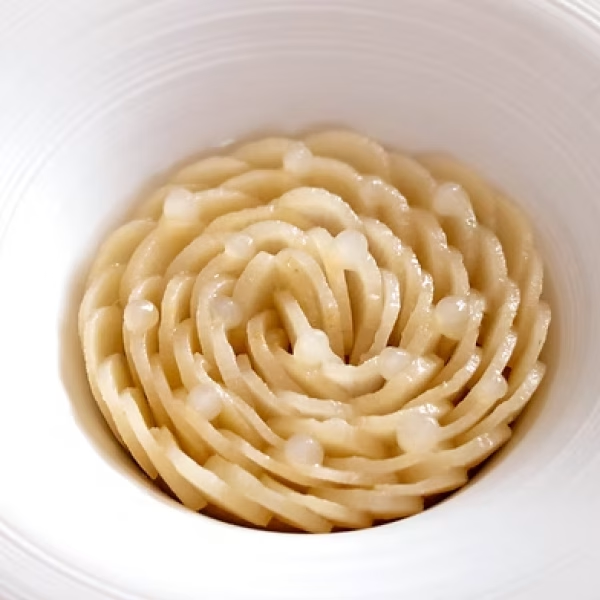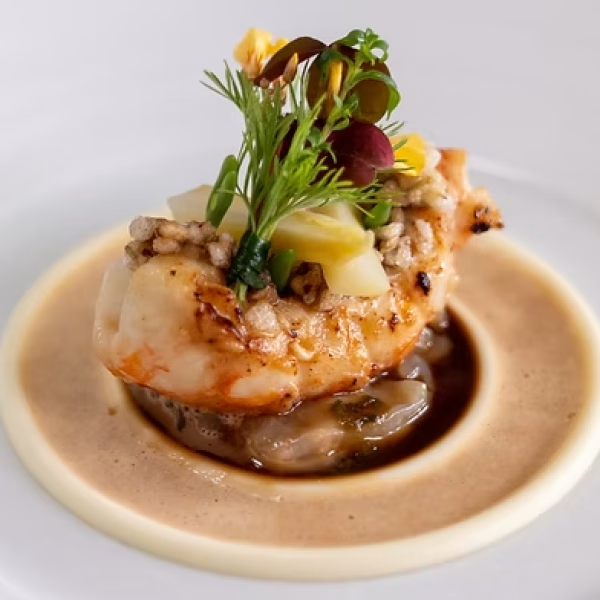
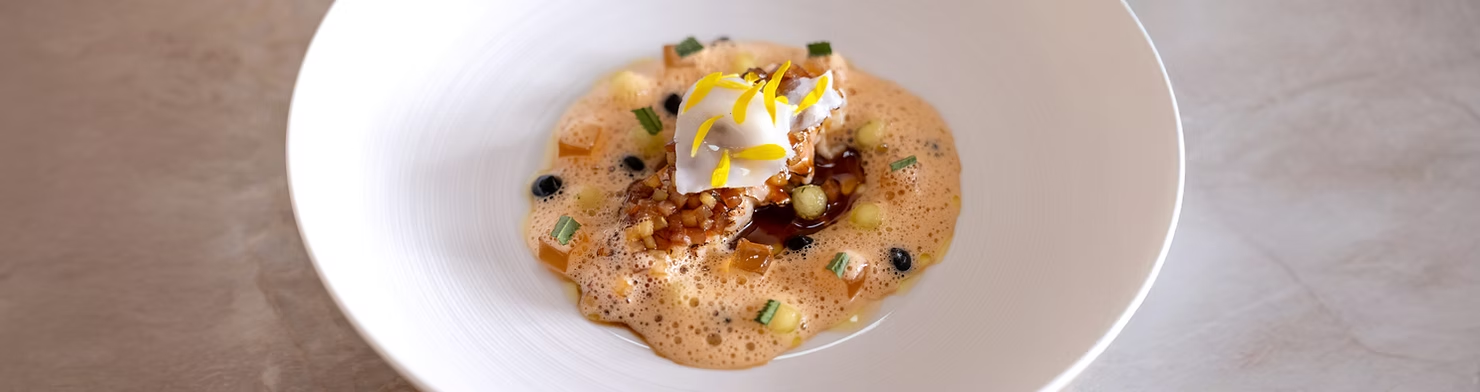
A special dish because we’re cooking with Michelin chef Tom Aikens of Muse by Tom Aikens in London! We’re going to make Tom’s signature langoustine and trotter dish. It’s braised trotter with a barbecued langoustine tail, a langoustine sauce, a burned apple oil and puree, a granny smith apple jelly and marigold apples.
How to clean the langoustines and prepare the tails.
Servings 15 dishes
Ingredients
- 15 langoustine 3/5 so 3 to 5 langoustines in a kg
Instructions
- Begin by separating the claws, heads and tails from the langoustines. These langoustine are from Norway and they’re grated as 3/5. So that means 3 to 5 langoustines in a kilogram.
- Now take the tails and gently twist the telson to remove it. Try to be as gentle as possible so the intestine comes out as well. If it’s still in there you need to remove it with a needle or with a thin tweezer. We remove it because it’s very bitter and not pleasant to eat. Once clean keep them in your fridge for later.
- Then separate the elbows from the claws. For this dish we’re not using the claws, but when they’re this big, you can definitely still empty them for their meat as well. The elbows we use for the sauce.
- Now back to the langoustine tails. Hold them straight in your hand and insert a skewer between the meat and shell. This to prevent them from curling up when cooking.
- Now steam them at 85 °C (185 °F) for 1.5 to 2.5 minutes. This depends on the size. We steamed these big ones for 2.5 minutes.
- Once cooked directly cool them down in ice water for 5 minutes before we can peel them.
- To peel them first remove the skewers and then crush the shell with your hand. Now peel it off and then keep them covered in your fridge for later.
Langoustine sauce
Servings 30 dishes
Ingredients
- 2 kg langoustine shells and heads
- 50 g olive oil
- 75 g carrot
- 75 g celery
- 5 cloves garlic
- 75 g fennel
- 75 g shallot
- 50 g ginger
- 1 lemon grass
- 40 g chestnut mushrooms
- 1 pepper
- 2 vine tomatoes
- 2 g black pepper
- 1 g coriander seeds
- 2 pieces star anise
- 2 g fennel seeds
- 4 g tarragon
- 4 g parsley
- 2 bay leaves
- 5 g thyme
- 50 g tomato paste
- 6 g salt
- 125 g white wine
- 125 g brandy
- 400 g veal stock
- 250 g chicken stock
- 200 g cream 35% fat
Instructions
- To make the sauce first open all the langoustine heads and scrape out the top part. This is super flavorful and later we use it to bind and flavor the sauce. Keep it in your fridge for later.
- Now spread the langoustine heads on a tray and also add all the elbows. Drizzle the olive oil on top and season it with salt and black pepper. Then toast the shells at 210 °C (410 °F) for around 20 minutes.
- While that’s toasting we can peel the carrot and cut it in small even pieces. Do the same with the celery. Now cut the cloves of garlic in half. Then add the carrot, celery and garlic to the langoustine shells and continue toasting everything for another 10 minutes.
- Meanwhile cut the fennel in smaller pieces as well and do the same with the shallot and the ginger. After the 10 minutes open up the oven and give all the ingredients a proper mix.
- Then add the fennel, shallot and ginger and toast it for another 8 minutes.
- While that continues to toast crush the lemon grass with a rolling pin or the back of a knife and then cut it in small even pieces. Also slice the chestnut mushrooms in smaller pieces. Now cut the pepper in half and remove some of the seeds. We leave a couple to add a bit more heat to the sauce. Cut the pepper in even pieces.
- Now again give the ingredients another mix before adding the lemon grass, mushroom and pepper. Toast it for another 5 minutes.
- Then cut the vine tomatoes in even pieces as well and add them to the remaining ingredients. Give it another mix before turning down the heat to 160 °C (320 °F) for 5 minutes.
- Now mix the black pepper corns with the coriander seeds, the star anise and the fennel seeds. Crush them in a mortar or with a small saucepan. We do this so the flavors can infuse easier with the sauce. Sprinkle the crushed spices on the tray and then transfer everything into a big pan.
- Turn on the heat and use the tongs to crush the shells and langoustine heads. Once crushed add the tarragon, the parsley, the bay leaves, the thyme, the tomato paste and the salt.
- Then deglaze the pan with the white wine and also add the brandy, the veal stock and the chicken stock. Now add enough water to just submerge all the ingredients and then let it simmer for 1 hour on a medium low heat.
- After the hour drain the sauce and let it drip for at least 30 minutes so you don’t waste a single drop.
- Then while blending add the langoustine brains we scraped out of the heads. Like I said before, this to flavor and thicken the sauce. Then pass it through a fine sauce sieve and press it through with a ladle or a spatula so you don’t waste a single drop.
- As a final step you only need to add the cream and then give it a taste for seasoning.
The braised trotter
Servings 30 dishes
Ingredients
- 1 carrot
- 1 celery stick
- 1 onion
- 1 shallot
- 100 g bacon
- 50 g butter
- 4 bay leaves
- 5 sprigs thyme
- 250 g Madeira
- 150 g Pedro Ximenez
- 250 g white port
- 1000 g veal stock
- 750 g chicken stock
- 2 pig trotters
Instructions
- First peel the carrot and cut it in even smaller pieces. Now do the same with the celery. Then clean the onion and the shallot and cut both in even chunks. As a final prep we only need to cut the bacon in even smaller pieces.
- Now add a drizzle of oil to a pan and start pan frying the bacon on a medium heat. When a nice golden color has formed all around add the butter and let it caramelize for a minute. Then also add the carrot and celery we just cut. Now season it with black pepper and fine sea salt and continue pan frying it for another 5 minutes.
- After that add the bay leaves and the thyme. Tear both the bay leaves and thyme to extract the most flavor. Also add the onion and shallot we cut before and pan fry it for another 8 minutes. Stir it every now and then.
- Once you’re happy with the color deglaze the pan with the madeira wine, the Pedro Ximenez and the white port. Let it boil for a minute before adding the veal stock and the chicken stock. Set it aside for later. Then clean the trotters. Watch the video above for a proper how to.
- Before adding the trotters to the pan, we just need to make a cartouche. For this just fold a piece of parchment paper and keep on folding it from the same corner. Then cut it to the desired size and unfold it.
- Now place the trotters in the pan and press everything down with the cartouche. The cartouche will insure an even cooking all around. Now cover the pan with a lid and cook the trotters in the oven at 180 °C (356 °F) for 2.5 hours.
- After that place the pan back on the induction and remove both the lid and the cartouche. Then turn on the heat and reduce the stock by half.
- Once the stock is reduced remove the trotters from the pan and place them on a tray. Be careful because it’s very hot! Now to clean the final bits just remove the knuckles from the top of the trotter and scrape all the fat off. Try to be gentle so you don’t damage the skin. The process is quite time consuming and you don’t want to ruin all your effort.
- Once the trotters are completely clean place them flat on a piece of parchment paper and place another piece on top. Then cover it with another tray and place something heavy on top. Let it set in your fridge to firm up. This takes about 2 hours.
- Meanwhile pass the cooking stock through a fine sauce sieve and tap the sieve so the stock passes through a bit faster and you don’t waste anything. Let this reduce for another 50% while skimming the top with a small ladle. You want to remove all the fat and scum. Once reduced keep it in your fridge for later.
- Now the final of the trotter is to dice them. First cut them in long even stripes and then cut those in a nice dice. That’s also known as a brunoise. Transfer it into a container and keep them covered in your fridge for later.
Burnt apple oil
Servings 40 dishes
Ingredients
The base oil
- 4 lemon grass
- 2 vanilla pods
- 125 g olive oil
- 125 g netral oil I use sunflower or grape seed oil
- 6 g salt
- 1 g Jasmine tea leaves
- 2.5 kaffir lime leaves
The burnt apple
- 250 g Granny smith apple
- 250 g red skinned apple
- 50 g olive oil
- 250 g cane sugar
- 6 g Maldon salt
Instructions
The base oil
- Begin with crushing the lemon grass and then cut them in even small pieces. Now cut the vanilla pods in half and scrape out the seeds. Cut the empty pods in smaller pieces.
- Then pour the olive oil in a vacuum bag and also add the neutral oil, the salt, the chopped lemon grass, the jasmine tea leaves, the cut vanilla pod and seeds and the kaffir lime leaves.
- Now vacuum the bag a 100%. After that steam the bag in a steam oven at 84 °C (183 °F) for 2 hours. Then leave it for a day at room temperature to infuse.
The burnt apple
- Clean the granny smith apples and the red skinned apple. Just cut them in four and remove the core.
- Now place them on a tray that’s lined with parchment paper and also add the olive oil, the cane sugar and the Maldon salt. Give it a good mix to ensure the apples are covered all around and then caramelize the apples at 180 °C (356 °F) for about 30 minutes. Turn them every 10 minutes to get a proper caramelization.
- Once you’re happy with the color let them cool down before placing the apples in a vacuum bag. Then pass the oil we made before through a super fine sieve and add it to the apples. Press all the oil out with the back of a spoon.
- Now vacuum this a 100% and cook it in a steam oven at 72 °C (162 °F) for another hour. Then let it infuse in your fridge for 3 to 4 days.
- After that drain the oil and let it drip for at least 1 hour.
- Keep both the apples and oil. Transfer the oil in a piping bottle and keep it in your fridge for later.
- The apples you can transfer into a blender with a knife tip of charcoal powder and blend it till smooth. Let it blend for at least 5 minutes to get the best cream.
The apple jelly
Servings 40 dishes
Ingredients
- 8 Granny Smith apples
- 10 g Vegi gel
Instructions
- Cut the granny smith apples of the core and cut them in smaller more manageable pieces. Now juice them. Measure 200 grams of the juice and set it aside for later.
- Pour 550 grams of the juice into a saucepan and reduce it till your left with 75 grams.
- After that add the 200 grams of the fresh juice and measure 220 grams of this base into a new pan.
- Also add the vegi gel and while stirring bring it to a boil. The vegi gel is a thickener and once it cools down it thickens fast, so you need to work fast as well.
- When it has boiled you can pour it on the desired mold and level it with a pallet knife. Then let it cool down in your fridge before remove the jellies from the mold. Keep them covered in your fridge for later.
The marigold marinade & apples
Servings 30 dishes
Ingredients
- 300 g water
- 50 g lemon juice
- 60 g sugar
- 50 g white wine vinegar
- 6 g lemon thyme
- 2 g citric acid
- 10 black peppercorns
- 15 g marigold leaves
- 1 Granny smith apple
Instructions
- Pour the water into a saucepan and also add the lemon juice, the sugar, the white wine vinegar, the lemon thyme, the citric acid and the black peppercorns. Now bring this to a boil. Once it has boiled let it cool down completely.
- Then pass it though a fine sieve into a blender and add the marigold leaves. Now blend it till smooth.
- After that pass it through a fine sieve into a measuring cup and let it cool down as fast as possible. This to preserve both the flavor and vibrant color.
- Now peel a granny smith apple and cut one side of the core. Slice that side in thin slices and cut those slices in a small brunoise. Keep them in the marinade to prevent them from chancing color.
- The remaining peeled apple you can cut with a small Parisienne tool. Add the apple balls to the marinade and let it infuse in your fridge or use a vacuum machine.
How to finish the dish
Instructions
- You can quickly pan fry or blowtorch the langoustine tails, but we barbecue them on a Konro grill with binchotan. This burns very hot and gives them a lovely toasty flavor without overcooking the langoustine. Barbeque them on the bottom for a couple of seconds before taking them off.
- Now heat up a bit of the trotter sauce and add the diced trotter. Heat this up as well and then add the diced apple. Give it a quick mix and keep it warm on a low heat.
- To plate first place the marinaded apple balls on a big plate and place the apple jellies in between. Then add the warm langoustine tail in the center and pipe some of the apple cream around it.
- After that gently cover the tail with the hot trotter and apple dice and place a thin slice of lardo on there.
- Now decorate the plate with some yellow marigold flower paddles.
- Then foam up the langoustine sauce with a hand blender and drizzle the foam around the langoustine. Now just add a couple drops of the apple oil and as a final touch some pieces of the marigold leaves.